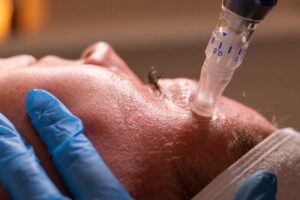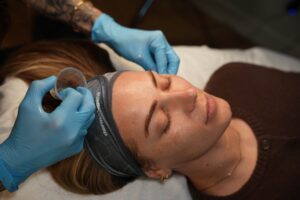
Microneedling stimulates the skin’s repair response and collagen production. Where do peptides fit in? Some treatment plans include peptide skincare, but the evidence depends on the specific formula, device and application protocol. This guide explores the rationale behind the combination, what research can tell us, and why product selection matters.
Does Microneedling With Peptides Work, And How?
Microneedling (also called collagen induction therapy) uses a device with fine needles to create controlled micro-injuries in the skin. Two mechanisms are relevant:
Transient enhanced absorption. The microchannels created during treatment temporarily increase the skin’s permeability, creating short-lived pathways that can help topical actives bypass the stratum corneum (the skin’s outermost barrier). Research on microneedle-assisted delivery has shown meaningfully improved penetration of certain peptides compared with intact skin. Importantly, this window is transient, the channels close over a number of hours, so the effect is about temporarily improved delivery, not permanent change to the skin barrier.
A natural remodeling response. The micro-injury itself triggers the skin’s wound-healing cascade, which is associated with the activity of growth factors and fibroblasts and, over time, collagen and elastin remodeling. This is the core rationale behind microneedling as a “regenerative-style” treatment.
A realistic framing: microneedling with peptides is best understood as a supportive approach to skin quality. Evidence for enhanced topical delivery is reasonable, but results vary by person, device settings, the peptides used, and the number of sessions. No single treatment “guarantees” remodeling.
What Peptides Are Used With Microneedling?
Peptides are short chains of amino acids included in topical formulations to “signal” skin cells. In a microneedling context, providers typically choose peptides and supporting actives that are appropriate to apply to compromised-barrier skin immediately after treatment. Common categories include signal peptides intended to support the skin’s collagen-related pathways, alongside soothing, barrier-supportive, and hydrating ingredients (for example, hyaluronic acid).
A key safety principle: not every serum is suitable to apply during or after microneedling. Products with potential irritants or actives that aren’t formulated for post-procedure use are generally avoided. This is one reason professional, in-clinic microneedling differs from at-home rolling, the products and protocol are selected deliberately. Your provider in Winnipeg will choose actives based on your skin and the treatment plan.
Treatment Sequencing: What A Session Looks Like
| Step | What happens | Why it matters |
|---|---|---|
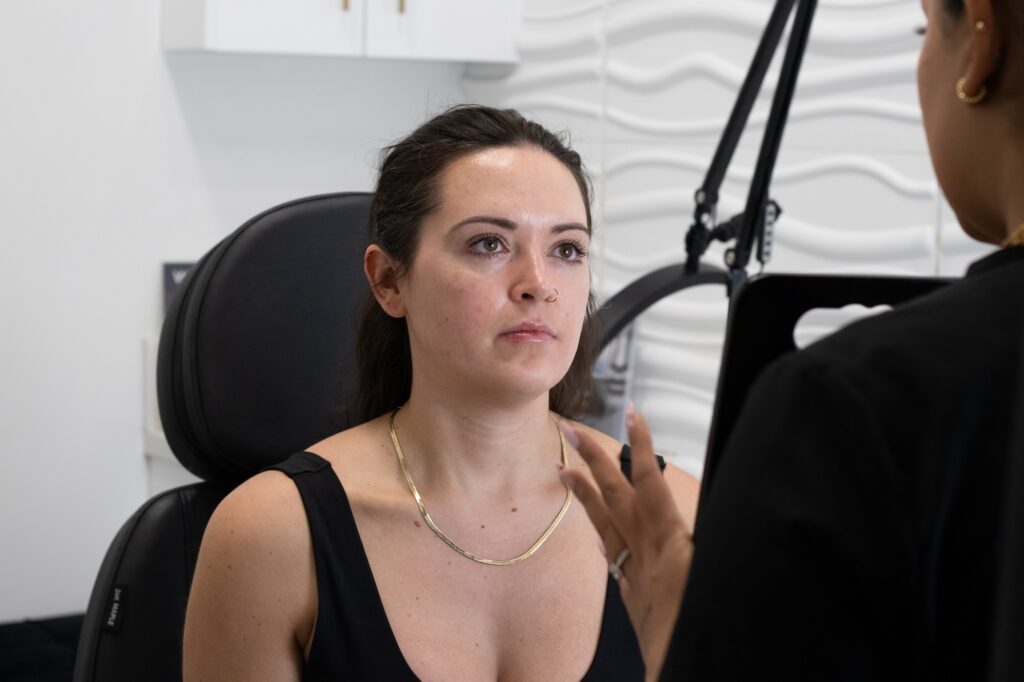
| 1. Consultation & assessment | Skin analysis, history, goals; suitability check | Confirms microneedling is appropriate and sets realistic expectations |
| 2. Prep & cleanse | Skin cleansed; numbing applied as needed | Comfort and a clean treatment field |
| 3. Microneedling pass | Device creates controlled microchannels at a chosen depth | Stimulates the repair response and opens transient delivery pathways |
| 4. Peptide application | Suitable peptide/soothing serums applied during/after | Takes advantage of the temporary high-permeability window |
| 5. Soothing & barrier support | Calming products, sun protection guidance | Supports comfortable recovery and skin-barrier health |
Sequencing matters: applying suitable topicals during or immediately after the needling pass is what links the two mechanisms together. Everything is tailored to your skin during a professional consultation.
Who Is An Ideal Candidate?
Microneedling with peptides may suit adults looking to support overall skin texture, firmness, and quality, or to address concerns like the look of fine lines, enlarged-looking pores, or uneven texture. The best way to know if it’s right for you is a professional assessment.
It may not be appropriate for everyone. People with active skin infections, certain inflammatory skin conditions, a tendency toward keloid scarring, those who are pregnant, or anyone taking medications that affect healing should disclose this at consultation, your provider will advise whether to proceed, modify, or refer you for medical guidance.
Post-Treatment Protocol: What To Expect Afterward
Aftercare supports comfort and results. General guidance often includes:
- First 24-72 hours: Expect possible redness, warmth, or a mild “sunburned” feeling that typically settles over a few days.
- Keep it gentle: Use only the soothing, barrier-supportive products your provider recommends; avoid active exfoliants, retinoids, and harsh ingredients until cleared.
- Sun protection: Diligent SPF is important while skin is recovering.
- Avoid heat and friction: Skip intense workouts, saunas, and makeup for the period your provider advises.
- Series, not single session: Remodeling-style results generally build over a series of treatments spaced several weeks apart, with maintenance over time.
Your specific aftercare may differ, always follow the instructions from your Winnipeg provider.
How Much Does Microneedling With Peptides Cost In Winnipeg?
At Grace Hill in Winnipeg, standard microneedling is $400 per session. The Bio-Cellular Reset, a specialized microneedling treatment that includes peptides, is $700. Both appointments are scheduled for 60 minutes. Your provider can help you choose the appropriate treatment for your skin and goals. Check our online booking menu for current pricing.
GRACEHILL SALON & SPA · WINNIPEG
Book Microneedling with Peptides in Winnipeg
Explore our service menu and book a microneedling appointment online. Not sure what service to choose? Fill out a consultation form and one of our experts will reach out to discuss a customized treatment plan.